According to a 2024 tracking survey by the Kaiser Family Foundation (KFF), approximately 6% of U.S. adults are currently taking a GLP-1 agonist medication — drugs like semaglutide (Ozempic, Wegovy) or liraglutide (Victoza, Saxenda). Among adults with a type 2 diabetes diagnosis, the rate rises to roughly 43%. The same survey found that around 12% of U.S. adults have taken a GLP-1 medication at some point in their lives.
These drugs work. Randomized controlled trials supporting FDA approval of semaglutide (Wegovy) for weight management showed statistically significant reductions in body weight compared to placebo over 68 weeks. The mechanism is well-established: GLP-1 agonists bind to receptors in the pancreas, gut, and brain, increasing satiety, slowing gastric emptying, and reducing appetite.
But this same mechanism creates a nutritional challenge that is easy to underestimate. When appetite is suppressed and a person eats substantially less food overall, they must be deliberate about what that smaller food volume contains. Protein is the nutrient most at risk.
The Protein Priority on GLP-1 Medications
When the body loses weight rapidly — whether through caloric restriction, GLP-1 medications, or bariatric surgery — it does not lose only fat. Without adequate protein intake and, ideally, resistance exercise, a significant portion of weight lost can come from lean muscle mass. This is sometimes called "muscle wasting" or sarcopenic obesity progression.
Protein plays several roles beyond muscle preservation during weight loss: it supports immune function, hormone production, enzyme activity, and bone health. It also has the highest satiety value per calorie of the three macronutrients, which makes it especially valuable when total food intake is reduced.
The challenge for GLP-1 users is practical: the drugs work precisely by making people feel full faster and stay full longer. Eating a large chicken breast, a full steak, or a heaping plate of legumes may become genuinely difficult. This is where the physical properties of the protein source — not just its nutrient content — start to matter.
Why Fish Is Exceptionally Well-Suited for GLP-1 Users
Fish has several properties that make it stand out as a protein source specifically for people on GLP-1 medications:
Why Fish Works on GLP-1
High protein density: Most cooked fish provides 20–27g of protein per 100g serving (USDA FoodData Central). That is comparable to chicken or beef, but typically in a less dense, more digestible form.
Low volume: A 100g portion of fish is physically smaller and lighter than an equivalent protein portion of red meat. Less volume means less strain on a stomach emptying more slowly than usual.
Omega-3 fatty acids: EPA and DHA from fatty fish support cardiovascular health, which is particularly relevant for GLP-1 users who often have underlying metabolic conditions including type 2 diabetes, hypertension, or dyslipidemia.
Neutral to mild flavor: Many GLP-1 users report heightened sensitivity to strong flavors and odors, particularly during the early dose-escalation period. White fish (cod, tilapia, halibut, sole) is among the mildest protein foods available.
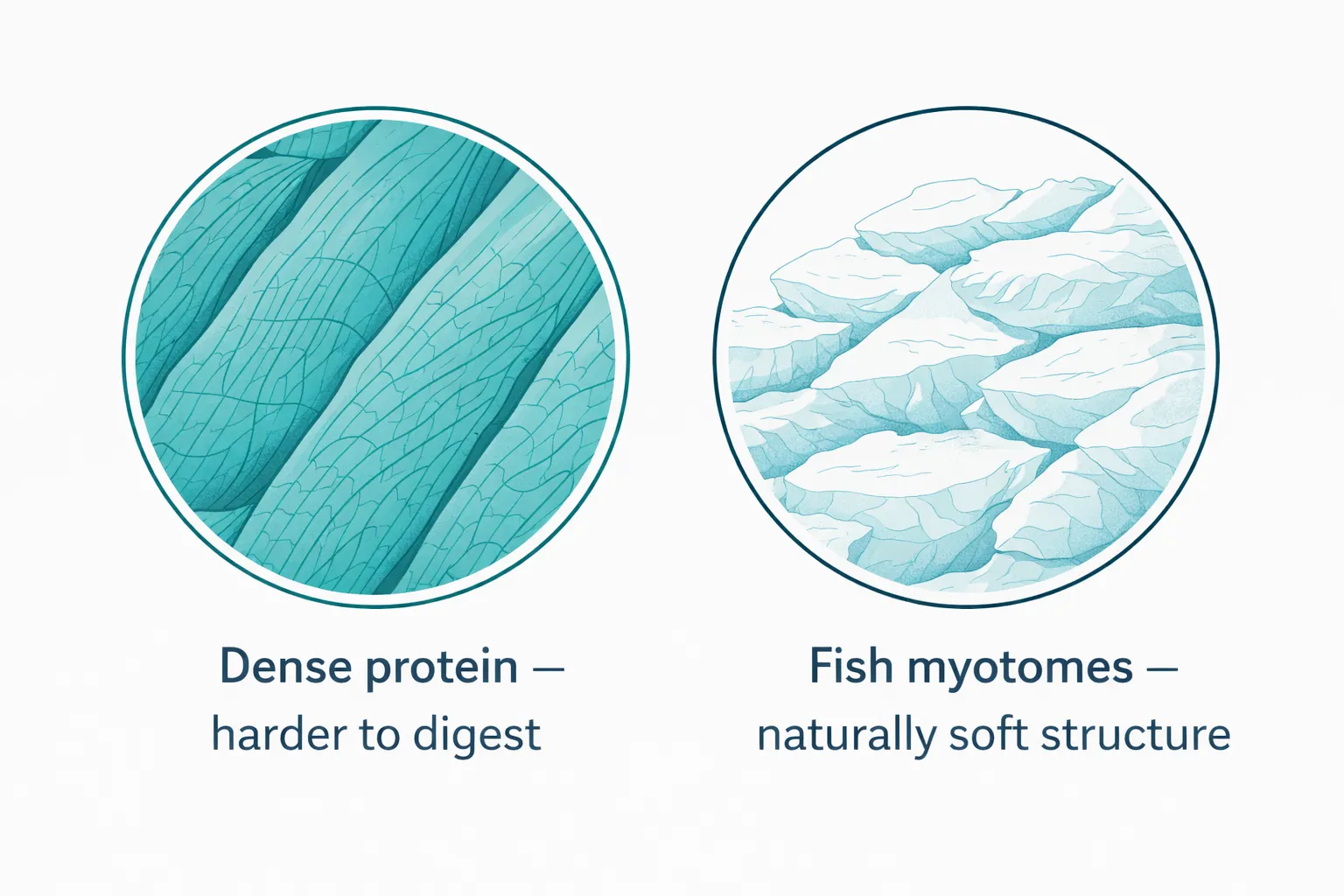
Soft, adaptable texture: Fish muscle structure is fundamentally different from land-animal muscle. Myotomes (the short muscle fiber segments in fish) are separated by connective tissue sheets, making fish naturally flaky and easy to break down — even more so when steamed or poached.
Best Fish Species: Protein Content and Digestive Considerations
The following data is sourced from the USDA FoodData Central database (cooked values, approximately 100g portions). Individual values vary by preparation method, wild vs. farmed origin, and specific cut.
| Fish | Protein (per 100g, cooked) | Calories (per 100g) | GLP-1 Suitability |
|---|---|---|---|
| Cod (baked/steamed) | ~23g | ~105 kcal | Excellent — very mild flavor, firm but flaky, low cal |
| Tilapia (baked) | ~26g | ~129 kcal | Excellent — highest protein-to-calorie ratio, neutral flavor |
| Canned tuna (light, in water) | ~25g | ~116 kcal | Very good — canning process softens texture naturally; convenient |
| Halibut (baked) | ~23g | ~111 kcal | Very good — mild, lean, slightly denser texture |
| Salmon (Atlantic, baked) | ~25g | ~206 kcal | Good — higher calorie due to fat content, but omega-3 benefit is significant |
| Sardines (canned in water) | ~21–24g | ~150–185 kcal | Good — one small can ≈ 1 serving; very soft; strong flavor (may not suit all) |
| Sole / Flounder (baked) | ~21g | ~91 kcal | Excellent — lightest texture of any common fish; very easy to eat |
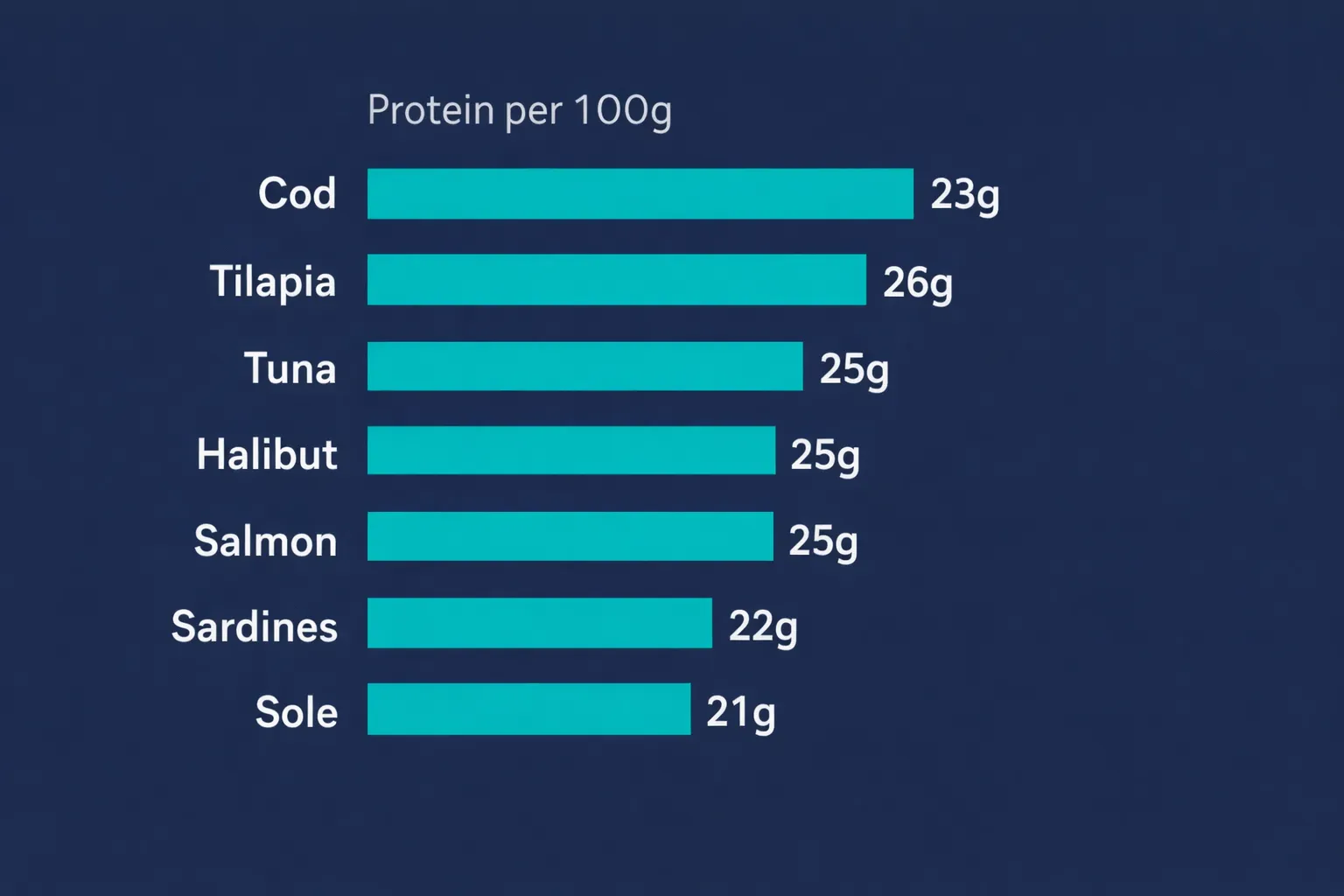
Source: USDA FoodData Central. Values are approximate; actual composition varies by origin, feed, and preparation. See fdc.nal.usda.gov for specific food IDs.
The Texture Challenge: Why Preparation Method Matters
GLP-1 agonists slow gastric emptying — this is documented in the FDA prescribing information for both Ozempic and Wegovy (semaglutide) and is one of the primary mechanisms by which they extend satiety. As a result, food remains in the stomach for longer than usual.
For most food textures this creates discomfort rather than danger: a feeling of bloating, fullness that becomes uncomfortable, or nausea that is amplified by the slow movement of food. Dense proteins — a well-done steak, a dry chicken breast, a firm-boiled egg — are more likely to produce this sensation than soft, easily broken-down proteins.
Preparation methods that produce softer fish textures include:
- Steaming: The gentlest method. Preserves moisture, produces a tender, easily flaked texture, and avoids added fats that could slow digestion further.
- Poaching: Fish simmered gently in water, broth, or a court-bouillon. Produces very soft, moist flesh.
- Baking at lower temperatures (150–160°C): Avoids the surface drying that makes fish harder to eat. Covering with foil retains moisture.
- Canned fish in water: The autoclaving process during commercial canning produces naturally very soft textures. Convenient, shelf-stable, and pre-portioned.
Methods to approach with caution: high-heat grilling or frying can produce a firm, dry exterior and a dense texture that may be less comfortable for GLP-1 users — particularly during early treatment phases or dose adjustments.
The Science of Texture Modification in Fish
Food scientists have studied the physical properties of fish muscle extensively. Fish myofibrillar proteins — the contractile proteins that form muscle fibers — can be made significantly more tender through exposure to proteolytic enzymes before cooking.
Two such enzymes are well-established and hold "Generally Recognized As Safe" (GRAS) status with the FDA in food applications: papain (extracted from papaya, Carica papaya) and bromelain (extracted from pineapple, Ananas comosus). Both enzymes cleave peptide bonds within myofibrillar proteins, reducing firmness without significantly affecting the protein content or amino acid composition of the fish.
Critically, both papain and bromelain are inactivated by heat above approximately 70°C, so their activity ceases during cooking. The result is a fish product that is softer in texture but nutritionally equivalent to conventionally prepared fish. This approach is an active area of research in functional food development — specifically in the context of designing high-protein, easy-to-eat foods for populations with reduced chewing capacity or digestive sensitivity.
For practical home cooking, marinating fish briefly in fresh papaya or pineapple juice before cooking achieves a mild tenderizing effect — though less controlled than laboratory enzyme preparations. The more reliable approach for most GLP-1 users remains choosing inherently tender species and using gentle cooking methods.
Ginger: A Natural Antiemetic Addition
Nausea is one of the most commonly reported side effects of GLP-1 medications, particularly during dose escalation. It is listed explicitly in the FDA prescribing information for semaglutide and typically peaks in the first 4–8 weeks of treatment before diminishing as tolerance develops.
Ginger (Zingiber officinale) has documented antiemetic properties in the clinical literature. A review published in the British Journal of Anaesthesia (Chaiyakunapruk et al., 2006) examined randomized controlled trials and found ginger to be significantly more effective than placebo in reducing postoperative nausea. Similar antiemetic effects have been observed in pregnancy-related nausea and chemotherapy-induced nausea.
Adding fresh ginger, ginger-infused broth, or small amounts of ginger to fish marinades is a practical strategy that aligns with the culinary traditions of many cultures where fish and ginger are naturally paired. It does not interact with GLP-1 medications and may help make fish-based meals more tolerable during the nausea-prone early weeks of treatment.
Practical Guidance: Fish Meals for GLP-1 Users
Evidence-Based Practical Tips
- Start with 60–80g portions rather than standard 150–200g servings. A smaller volume of high-protein food is better than a larger portion that causes discomfort.
- Choose white fish first — cod, tilapia, sole, halibut — for the mildest flavor and softest texture. Add fattier fish (salmon, sardines) once nausea has stabilized.
- Steam or poach rather than grill. Moisture-retaining methods produce textures that are easier to eat when gastric emptying is slowed. A steamer basket makes this effortless.
- Canned fish in water (tuna, sardines) is nutritionally equivalent to fresh and has a naturally soft texture from the commercial canning process. It is also portion-controlled and shelf-stable.
- Add ginger to marinades, broths, or dipping sauces. Small amounts (1–2g fresh grated ginger per serving) are sufficient for culinary purposes.
- Avoid strong odors during nausea-sensitive periods. Cod, tilapia, and sole have the most neutral smell of common fish. If preparing fish for the first time on GLP-1, ventilate the cooking area well.
- Track protein, not volume. The goal is to meet protein needs within a smaller eating window. A small bowl of flaked cod with a tablespoon of olive oil and vegetables can deliver 20–25g of protein in under 150g of food.
What to Be Cautious About
Not all fish advice translates unchanged for GLP-1 users:
- Mercury limits still apply. FDA and EPA guidelines on mercury in fish — particularly for women of childbearing age, pregnant women, and young children — are unchanged by GLP-1 medication status. High-mercury species (swordfish, king mackerel, bigeye tuna, shark, tilefish from Gulf of Mexico) should be avoided or strictly limited regardless. See our complete mercury guide for full FDA/EPA limits by species.
- Fish oil supplements and delayed gastric emptying. Omega-3 supplements in high doses may contribute to gastrointestinal discomfort in some individuals. Obtaining omega-3s from food sources (salmon, sardines, mackerel) is generally preferable to supplements for GLP-1 users, though this is individual and worth discussing with a healthcare provider.
- Sodium in canned fish. Many canned fish products are preserved with salt. If you are managing hypertension — common in the GLP-1 user population — choose "no salt added" or "low sodium" varieties and check nutrition labels.
Conclusion
GLP-1 medications change the relationship with food in ways that make food choices more consequential, not less. When the window for eating is smaller, the quality of what goes into that window matters more. Fish — particularly white fish prepared with moisture-retaining methods, and canned fish for convenience — offers an unusually favorable combination of high protein density, low volume, soft texture, mild flavor, and metabolic benefits from omega-3 fatty acids.
The relationship between food texture, protein bioavailability, and digestive comfort in GLP-1 users is an emerging area of food science and clinical nutrition. Current evidence supports prioritizing soft, high-protein foods. Fish, prepared thoughtfully, fits that profile better than almost any other commonly available protein source.
References
- Kaiser Family Foundation (KFF). KFF Health Tracking Poll: Use of and Views on GLP-1 Drugs. 2024. kff.org
- U.S. Food and Drug Administration. Ozempic (semaglutide) Prescribing Information. NDA 209637. FDA, 2017 (revised).
- U.S. Food and Drug Administration. Wegovy (semaglutide) Prescribing Information. NDA 213051. FDA, 2021 (revised).
- U.S. Department of Agriculture, Agricultural Research Service. FoodData Central. 2024. fdc.nal.usda.gov
- FAO. The State of World Fisheries and Aquaculture 2022. Rome: Food and Agriculture Organization of the United Nations, 2022. ISBN 978-92-5-136364-5.
- Chaiyakunapruk, N., Kitikannakorn, N., Nathisuwan, S., Leeprakobboon, K., & Leelasettagool, C. (2006). The efficacy of ginger for the prevention of postoperative nausea and vomiting: a meta-analysis. British Journal of Anaesthesia, 96(2), 168–175. doi:10.1093/bja/aei097
- Wilding, J.P.H., Batterham, R.L., Calanna, S., et al. (2021). Once-Weekly Semaglutide in Adults with Overweight or Obesity. New England Journal of Medicine, 384(11), 989–1002. doi:10.1056/NEJMoa2032183
Related reading: Mercury in Fish: FDA/EPA Safe Species Guide · Best Fish for Muscle Gain · Omega-3 Myths vs Facts · Tuna Safety Guide · Farmed vs Wild Fish

Prof. Dr. Zayde Ayvaz
Professor of Fisheries Industry Engineering at ÇOMÜ. Researches seafood nutritional composition, AI-driven quality assessment and sustainable blue food systems.